
Chicken Road – How Far Will You Go?
Chicken Road has quickly become one of the most talked-about titles in the online casino world, and this page brings together everything you need to know about it. We are proud partners with the provider InOut, the studio behind this game, and we have put together a complete overview covering the rules, the features, and a free demo you can try right now.
The game has grown popular largely through word of mouth on social media, where short clips of big multiplier wins keep circulating among players. One of the reasons for that popularity is a stated RTP of 98%, a figure well above what many similar titles offer, along with a maximum win that can reach into the millions of your stake at the highest difficulty setting.
Where To Play – Our Picks for Chicken Road Casinos
Below this section, you will find a widget listing the casinos we currently recommend for playing Chicken Road. We regularly review operators before adding them to this list, so you can pick one with confidence instead of searching around on your own. A safe casino for the Chicken Road game should hold a valid gambling license, use certified random number generation, and offer clear terms for deposits and withdrawals. It also helps when the operator supports several payment methods and responds quickly through customer support. We only add a Chicken Road casino to our list once it meets these basic standards, so every option below has already passed our checks.
Chicken Road Rules & Difficulty Levels
Rules
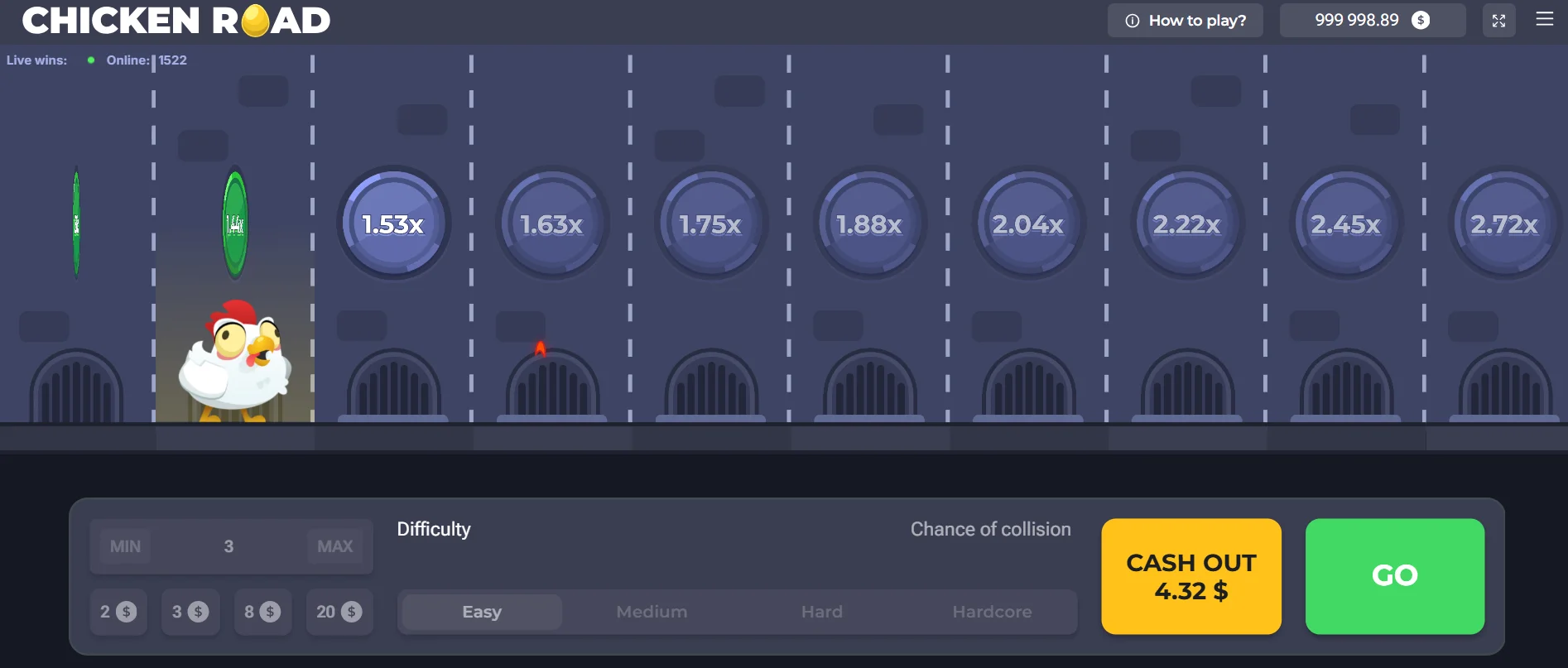
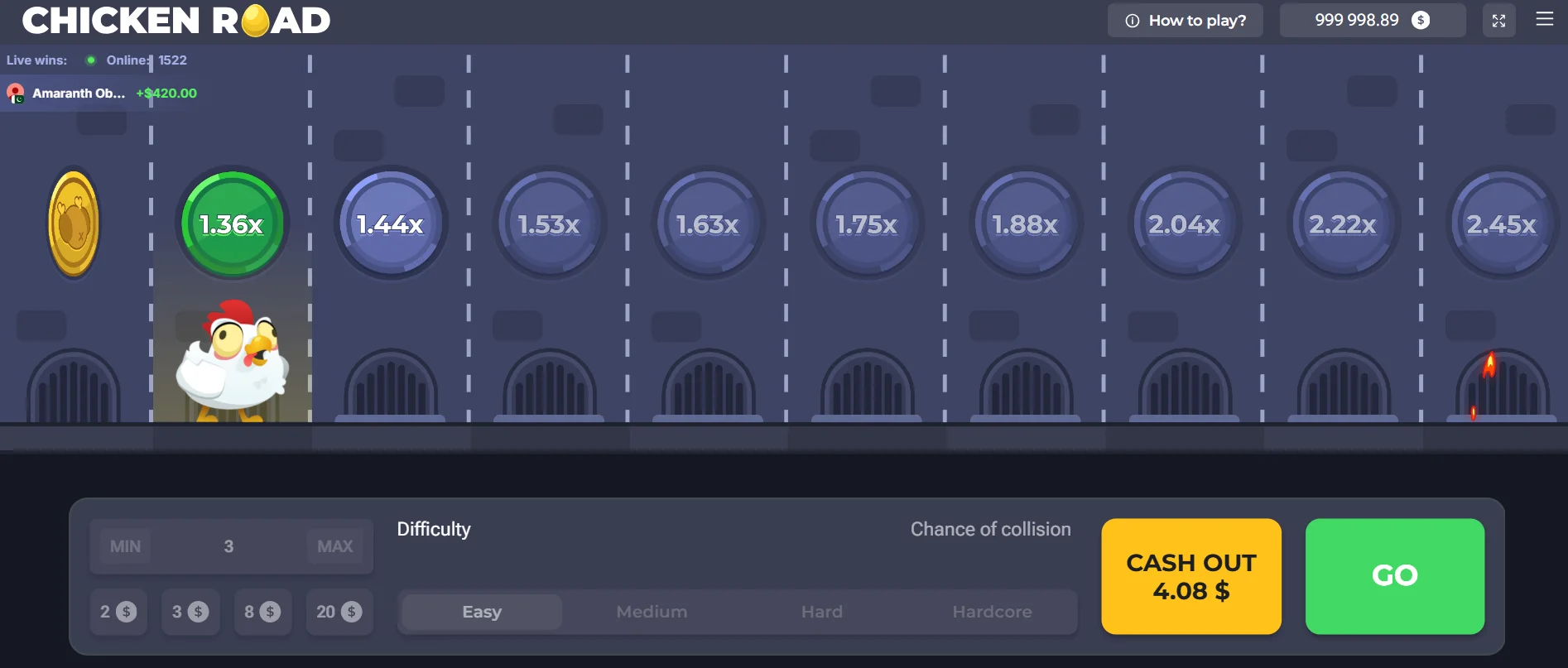
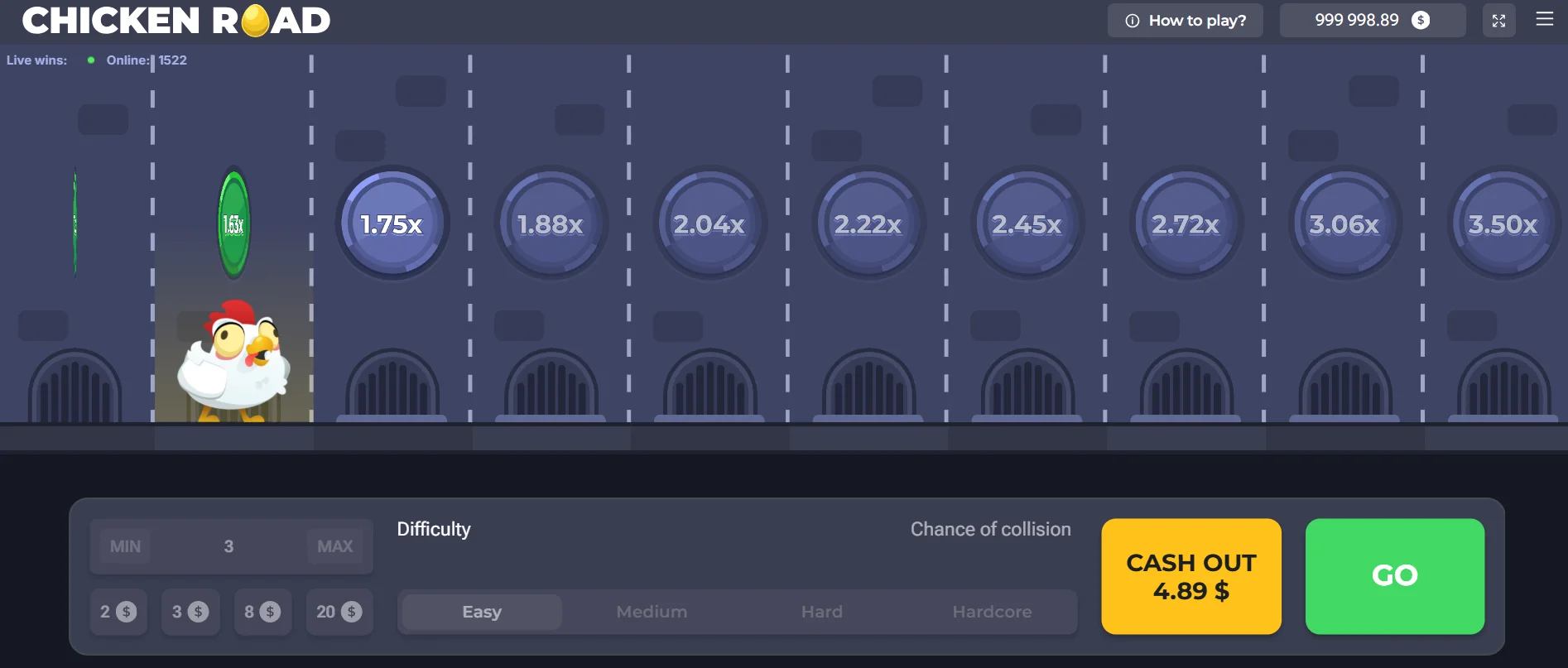
The idea behind Chicken Road is simple to explain but takes some practice to master. The player’s task is to guide a chicken through a tunnel-like road and reach the finish line unharmed. Flames appear along the chicken’s path at unpredictable points, and the chicken needs to reach the end of the road without stepping into one of them.
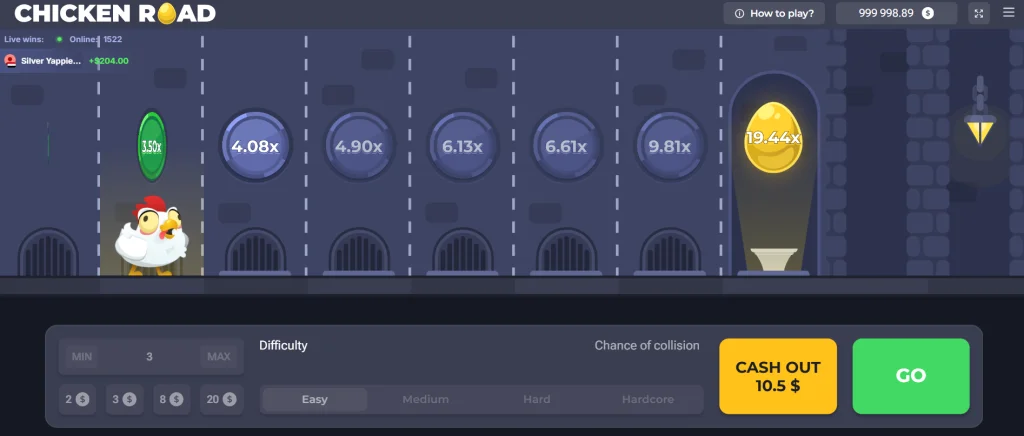
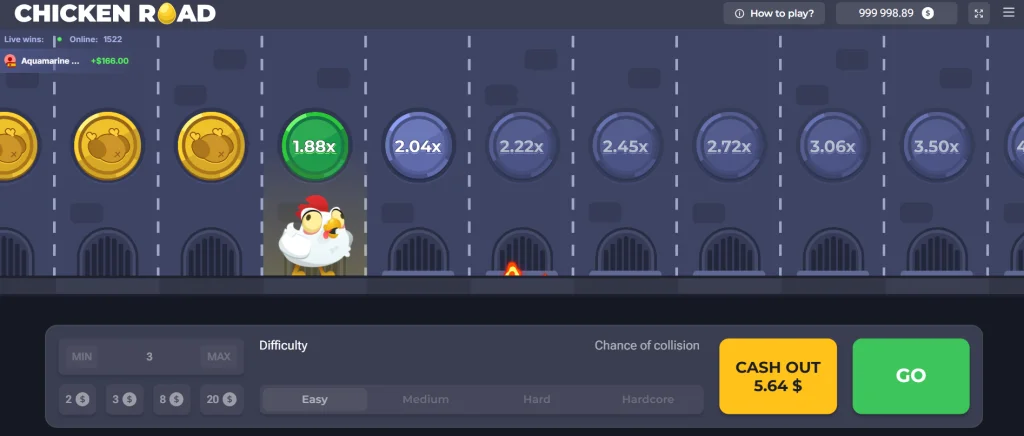
Every step forward that avoids a flame raises the multiplier attached to the bet, and the player can choose to stop and collect the current multiplier at any moment. Wait too long, and a flame can end the round instantly, turning a promising run into nothing. This back-and-forth between pushing further and cashing out is what gives the Chicken Road game its pace.
Difficulty Levels
Chicken Road offers four difficulty levels, and each one changes the balance between risk and reward. On Easy, the chicken has to pass through more steps, but each one carries a lower chance of hitting a flame, which keeps the multiplier growth gradual. Medium raises the risk per step and the multiplier climbs faster as a result.
Hard reduces the number of steps further and pushes both the risk and the potential multiplier higher again. Hardcore is the most demanding setting, with the fewest steps and the highest chance of a flame on each one, but it also carries the largest possible multiplier by a wide margin. We go into the exact numbers behind each level in the RTP and Multipliers section further down this page.
Pros/Cons of Chicken Road
- Fair RTP of 98% – a solid payout ratio for a fast-paced game with short rounds and real chances to win.
- Four difficulty levels – players can match the game to their own comfort with risk, from a gentle Easy mode to an intense Hardcore setting.
- Free demo available – the Chicken Road demo lets anyone learn the mechanics before placing a single real bet.
- Instant cashout – winnings can be collected the moment a player decides to stop, without waiting for a round to finish on its own.
- Simple, clear interface – the game avoids clutter, so new players can understand what is happening on screen within minutes.
- Mobile-friendly design – the game runs smoothly on phones and tablets, so playing on the move is not a problem.
- Not available in all casinos – the Chicken Road game is not yet offered by every operator, so players may need to check our list first.
- High volatility on top settings – Hardcore mode can lead to fast losses if a player is not prepared for its pace.
Chicken Road For Real Money: How It Works
Getting started with Chicken Road for real money takes only a few minutes once you know the steps. Below, we break down the whole process from picking a casino to collecting your winnings, so nothing catches you off guard along the way.
Choose a Casino
On our website, there is a dedicated casino section where anyone can pick from our recommended list and play Chicken Road there. Every casino on that list has been checked by our team for licensing, payout speed, and overall reliability, so we can recommend all of them without hesitation. Take a moment to compare a couple of options before settling on one, since welcome offers and payment methods can vary from site to site.
Create an Account
Once a casino is chosen, the next step is registering an account. This usually takes just a couple of minutes and requires basic details such as an email address and a password. Some casinos also ask for identity verification early on, so having a valid ID ready can speed up the process later.
Insert a Deposit
With an account set up, the next step is funding it. Most of our recommended sites support several payment options, including cards and e-wallets, so a deposit is usually processed within minutes. It is worth checking the minimum deposit amount and any related fees before committing to one method over another.
Place a Bet
With funds in the account, the player can open the Chicken Road game and set a bet amount. Betting limits vary between casinos, so it helps to check the minimum and maximum stake before the round begins. Starting with a smaller bet is a sensible way to get a feel for real-money rounds after using the demo.
Select a Difficulty Level
Before starting the round, the player picks one of the four difficulty levels described earlier on this page. This choice shapes the entire round, from the number of steps to the size of the multiplier, so it deserves a moment of thought rather than a quick guess. Easy and Medium suit a steadier pace, while Hard and Hardcore are better suited to players who already understand how the game behaves.
Guide the Chicken Forward
Once the round begins, each step the chicken takes safely raises the multiplier attached to the bet. The player watches the road unfold step by step, deciding after each successful move whether to continue or stop. This is the point where the difficulty level chosen earlier really comes into play, since the pace of risk depends entirely on that setting.
Cash Out Your Winnings
As the chicken advances safely along the road, the multiplier keeps rising. The player can stop at any point to lock in the current multiplier as a win. Timing this decision well is really the core skill of the whole game, and there is no single correct moment to stop, since it depends on personal comfort with risk. No new durable facts to add here this was just an edit to existing copy. Let me know if you’d like the same expansion treatment applied to any other section, or if the added steps (Create an Account, Guide the Chicken Forward) should be trimmed back down.
Chicken Road Game Features & Bonuses
- Multiple difficulty levels – this feature lets each player set their own pace, whether they prefer a steady climb or a fast, high-stakes round.
- Free demo mode – anyone can try the Chicken Road demo without spending real money, which makes it easier to understand the mechanics before betting.
- Instant cashout option – the ability to stop at any step gives players full control over how much risk they are willing to accept in a single round.
- Transparent win system – every multiplier step is shown clearly, so players always know exactly what they stand to gain before deciding whether to continue.
- Progressive multiplier – the reward grows step by step, which keeps each round engaging from the very first move to the last.
- Bet history tracking – past rounds are logged, letting players review their own results and adjust their approach over time.
- Minimalist design – the visuals stay clean and uncluttered, so nothing distracts from the actual gameplay decisions.
RTP & Multiplier Table
The Chicken Road game carries an official RTP of 98%, which means that, over a very large number of rounds, the game returns 98% of all wagered money back to players as winnings. This figure is a long-term average and does not predict the outcome of any single round, but it does place Chicken Road above many comparable titles in its category. The table below shows how the four difficulty levels differ in steps, risk, and multiplier range.
| Level | Safe Steps | Risk per Step | Min/Max Multiplier | Chance of Losing | Suited For |
| Easy | 24 | Low | 1.02x – 24.5x | Around 4% per step | Beginners and cautious players |
| Medium | 22 | Moderate | 1.11x – 2,254x | Around 12% per step | Players comfortable with some risk |
| Hard | 20 | High | 1.22x – 52,067x | Around 20% per step | Experienced players seeking bigger swings |
| Hardcore | 15 | Very high | Several hundred to millions of x | Highest of all levels | Players chasing the largest possible multiplier |
Tips for Successful Playing Chicken Road
Start with the demo version to get familiar with how the flames appear and how quickly the multiplier grows before risking any money. Choose the Easy level first rather than jumping straight into Hardcore, even if the higher multipliers look tempting. Take regular breaks between sessions instead of playing one long stretch, since decision-making tends to get sharper with a clear head.
Keep an eye on your bet history to notice any patterns in how you play and where you tend to cash out. Increase your bet size gradually rather than all at once, so a single round does not carry more weight than you intended. Switching between difficulty levels occasionally can also help you understand which pace suits your style best, instead of sticking to just one setting out of habit.
Chicken Road: Demo Mode
Trying the demo before betting real money is one of the smarter ways to approach this game. At the top of our site, players can open the Chicken Road demo and practice as many rounds as they like without any risk attached. This gives newcomers time to see how the flames appear, how the multiplier grows, and how the different difficulty levels actually feel in practice. Even players with experience in similar step-based games often return to the Chicken Road game demo when a new difficulty level or feature is introduced, simply to get a feel for it before committing a real bet.
Chicken Road Mobile APP & APK
There is currently no dedicated mobile app or APK file for Chicken Road, and players do not need one to enjoy the game. Every casino on our recommended list runs the Chicken Road game directly through a mobile browser, with the same features and the same interface found on desktop. This means no downloads, no storage space taken up on a phone, and no need to worry about installing files from outside an official app store. Simply open a casino from our list on a mobile device, log in, and the game loads and plays exactly as it would on a computer.
Is Chicken Road Serious?
Yes. Chicken Road is a legitimate game built by an established provider, running on certified random number generation and offered through licensed casinos. The RTP of 98% and transparent multiplier structure reflect a serious approach to fairness. It suits players looking for a fast, clear format with adjustable difficulty. Trying the free demo first remains a sensible way to see if the game fits your preferences before playing for real money.

Daniel Mercer
As part of my recent research into the legitimacy of the game, I carefully examined its legal status across multiple jurisdictions, as well as the regulatory frameworks governing its distribution and use. The findings indicate that the game is indeed legal, provided it is accessed and played through properly authorized channels. The legal environment surrounding it is generally well-defined, and there are no indications that the game itself violates any applicable laws when offered by compliant providers.
However, it is essential to emphasize that the safety and fairness of the experience depend heavily on the platform used. Playing only on licensed platforms ensures that users are protected by regulatory standards, secure systems, and fair-play mechanisms. In addition, I strongly encourage a responsible approach to gameplay setting personal limits and maintaining awareness of time and spending. This balance is key to ensuring that the experience remains both safe and enjoyable.